Gen-Z Protests in Nepal: The Rise of Social Media Democracy
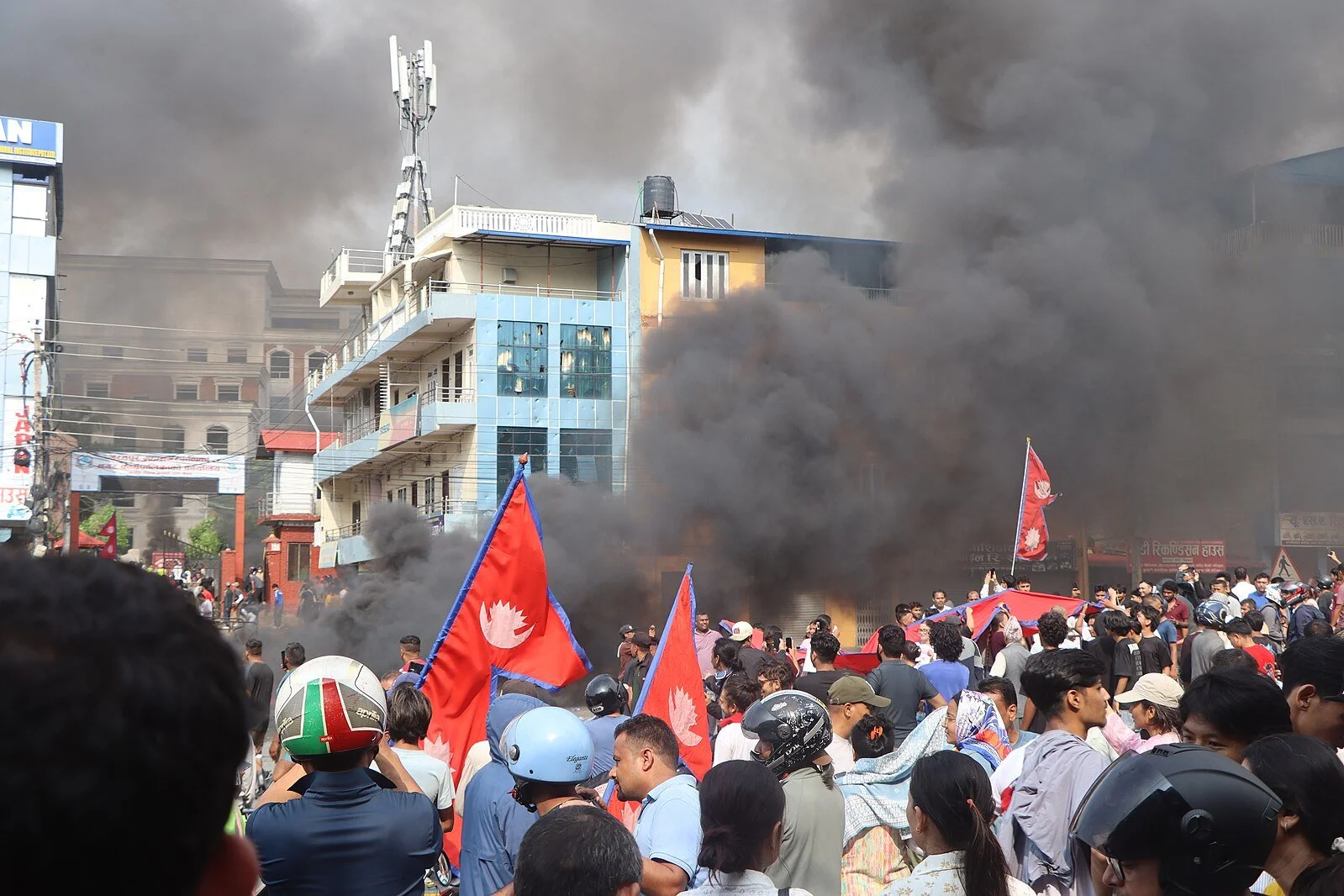
In early September 2025, youth across Nepal used social media platforms to mobilize mass demonstrations that became some of the largest protests in the nation’s history, leaving dozens dead, thousands injured, scores of buildings damaged, and a nation facing its largest political crisis since the 2006 Nepalese Revolution. This protest follows in the footsteps of similar youth-led protests in Asia, with both Indonesia and the Philippines experiencing mass disruption as young adults protested against growing corruption, nepotism, and injustice. These protests signal a new era in political activism with the emergence of technologically savvy youth as major forces within Nepal’s political future. With a new interim prime minister appointed and new elections slated for March 2026, it remains to be seen if the new government can guarantee both stability and reform, or if the country will experience further uncertainty.
On September 4, Nepalese lawmakers instituted a social media ban aimed at limiting access to major platforms, including WhatsApp, YouTube, LinkedIn, Facebook, and Instagram, after these platforms failed to register under new governmental registration guidelines. These restrictions sparked fear and discontent among much of Nepal’s population as many Nepalese rely on social media to communicate with a large expat population. While the social media ban may have triggered the largest waves of youth mobilization, Nepal’s sluggish economic growth and growing opposition to government corruption have also fueled outrage. With over 7.5% of Nepalese citizens living and working abroad, the local economy heavily relies upon remittances sent home to a nation where over 20% of youth are unemployed, which make up over 33% of the nation’s GDP.
While the government asserted that the new restrictions were meant to reduce online hate speech, misinformation, and cybercrime, many pointed to them as a broader crackdown on freedom of speech in light of a growing internet trend against “nepo kids.” These images, widely propagated on social media platforms, juxtapose images of the children of Nepalese politicians, who have access to luxury goods and items out of reach for ordinary citizens, with the struggles of a country that ranks 107th out of 130 globally on Transparency International's corruption perception index. The country is regularly rocked by political scandals, such as the embezzlement of over 70 million USD from the construction of a new airport in the city of Pokhara, which has contributed to growing public opposition to Nepalese politicians. These scandals feed into Nepal’s continued democratic instability, with over a dozen governments failing to maintain control for their entire five-year terms since 2008, further eroding trust in traditional party leadership and intensifying the political conditions that sparked youth action.
After the ban was announced, the first wave of civil unrest occurred on September 8, concentrated in the capital city of Kathmandu. The NGO Hami Nepal, dedicated to raising awareness for marginalized citizens after the 2015 earthquakes, organized what were meant to be a series of peaceful rallies. However, these protests escalated to violence between protestors and police when they tried to enter government buildings such as the parliamentary complex, resulting in the use of live ammunition. On the first day of protests, over 19 were killed, with hundreds severely injured. As a result of the protests, Home Minister Ramesh Lekhak resigned, and the government lifted the social media ban.
Despite the government’s attempts to appease the protesters, civil unrest continued for several more days. In an ironic twist to the government’s social media ban, many youth activists utilized social media platforms such as WhatsApp and Instagram to coordinate protest activities throughout the unrest. Hami Nepal supporters used social media to report on police and troop movements, share unofficial press releases, issue warnings against mass disinformation, and propagate images of state violence against protestors.
On September 9, protesters managed to force their way into several key governmental buildings, setting fire to the Supreme Court and the presidential office, as well as destroying a section of the Singha Durbar, a historic building that housed the Parliament of Nepal. Other buildings were not free from damage, with the residences of governmental ministers and parliament members, prisons, the Hilton Hotel in Kathmandu, and the Ministry of Health also affected. By the time curfews were lifted on September 13, 72 people had been confirmed dead, with over 2,100 reported injured.
As a result of the escalations, Prime Minister K.P. Sharma Oli resigned on September 9, along with several high-ranking governmental ministers and members of parliament. In a novel form of digital democracy, over a hundred thousand young Nepalese took to Discord, a popular online chatroom service popular with video gamers, to debate the country’s future. After two days of discussion and voting, the leading organization behind the protests, Hami Nepal, announced Sushila Karki, the former Chief Justice, as their chosen candidate for interim prime minister. Sworn in on September 12, Karki, 73 years old, is the first female prime minister in the nation’s history. With Parliament suspended, Karki has pledged to only remain in office until new elections are held, set for March 5 of next year.
With over 5 months until elections, the interim prime minister will have to navigate several challenges that the fragile nation will face. In the immediate aftermath of the protests, many observers and activists called for inquiries into the high death tolls. While Karki has already guaranteed the maximum compensation for the families of those killed, around 7,000 USD, and has created a panel to investigate, many more are calling for those in the police and army to be held accountable. Additionally, Karki will have to deal with the current issues that resulted in the surge in political action: continuous hits to Nepal’s economy, such as continued reductions in tourism, attempts from ousted governmental officials to reenter politics, and the entrenched culture of corruption.
While the election remains several months away, many Nepalese politicians will be vying for power in a radically transformed landscape. A prime minister outside of the current rotation of KP Sharma Oli (CPN–UML), Sher Bahadur Deuba (Nepali Congress), and Pushpa Kamal Dahal (CPN–Maoist Centre)–who have traded power through shifting coalitions–seems likely. Potential challengers include monarchists, led by supporters of the former King Gyanendra, who have emerged as a potent force in Nepalese politics after sparking protests earlier this year. Another possibility is the Mayor of Kathmandu, Balendra “Balen” Shah, a former rapper now involved with politics. While a young force in Nepalese politics at 35, he has come under fire for nationalistic views, including those that suggested a revival of a “Greater Nepal.”
The youth-led Nepal protests mark more than mere dissatisfaction with the current political order, instead contributing to the changing landscape of political organization and expression. For a new generation raised on the internet, social media now appears to be the primary means of organizing and disseminating information, as well as serving as an open forum for political organization separate from traditional party structures. While it remains unknown who will take the reins of Nepal after the election, young activists have made it clear that the Nepalese political future must center transparency and digital freedom as cornerstones of their democracy.