
Disposable Warfare: Drones and the Death of the Offensive
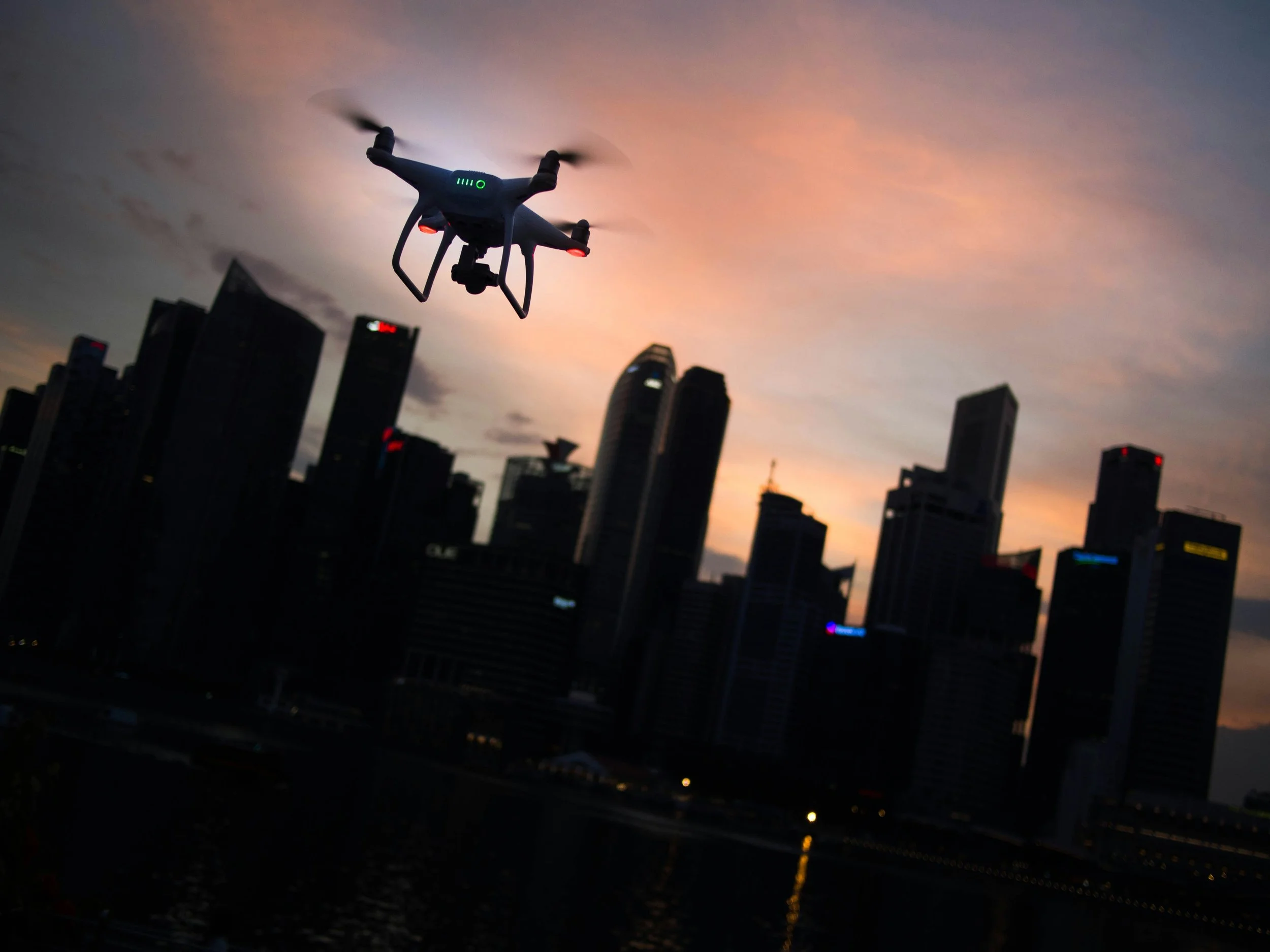
Over the past few years, warfare has fundamentally shifted. This change did not come from doctrinal or diplomatic shifts, but from a shift in who, or what, does the fighting. Unmanned aerial vehicles (UAVs), the more technical name for drones, have collapsed the distance between commercial technology and battlefield utility, eroding the power of the offensive maneuver and altering the strategic calculus of modern conflict.
You can divide the drone landscape into two categories based on size. First are the industrial or military-grade drones, such as Turkish Bayraktar TB2s or American MQ-9 Reapers: large platforms designed for intelligence, surveillance, reconnaissance (ISR), and strike missions. These are manufactured by states, offering a relatively low-cost and effective alternative to crewed aircraft, but still require a moderate amount of manufacturing and supply chain capacity to produce. Second are commercial or first-person view (FPV) drones. These are readily available to the average consumer, require little technical expertise to construct, and are often used for shorter-range “kamikaze” attacks. Unlike their heavier military counterparts, these small drones usually carry lighter, although still lethal, payloads.
Despite their lighter payloads, FPV drones have had shockingly powerful and viral results for Ukraine in the ongoing Russia-Ukraine war. Because of the dual-use and commercial nature of these drones, much of the current Ukrainian drone production workforce is civilian, often operating out of covert shops scattered across cities and towns. These shops are occupied by ordinary people—baristas, dancers, farmers—who have transformed consumer technology into an efficient wartime industry, with NPR reporting that just one of these shops is able to produce around 100 drones a month. This decentralized model of production is crucial for Ukraine, which used an estimated 1.5 million drones in 2024 alone. As Richard Schultz, a professor of international studies at Tufts, notes, this level of usage has helped Ukraine become a “laboratory” for drone experimentation, driving constant experimentation over tactics, launch platforms, and countermeasures.
The impact of increased drone production and experimentation on warfare has been significant, with officials estimating that 70-80% of casualties are now coming from drones. This lethality largely stems from their precision: unlike artillery shells, which follow a fixed arc and land on a calculated spot, drones can actively pursue moving targets, even those concealed in trenches, forests, or other forms of cover. Open-source data assessments further support this shift. Data compiled by the open-source intelligence project Oryx, which visually verifies destroyed equipment using battlefield footage and social media archives, confirms that as many as two-thirds of Russia’s combat vehicle losses—including armored vehicles and battle tanks—are due to drone attacks.
Their accuracy is magnified by their speed, with drones providing a low-cost method of constant surveillance, enabling quick detection of any enemy movements. The instant an infantry movement, exposed position, or armored convoy is identified, FPV drones can be deployed within mere seconds. According to Ukraine’s former commander-in-chief, this dynamic has created a “hardened and unyielding environment,” as any visual sighting or electronic broadcast prompts an attack “within seconds.” This constant threat of attack prevents either side from launching sustained offensives, contributing to a chronic stalemate in which both sides have entrenched themselves into permanently defensive positions.
Another factor driving the effectiveness of drones is their difficulty to counter. Traditional air systems are designed for larger targets: missiles and crewed aircraft whose movements and future locations are predictable based on infrared and radar signatures. FPV drones are small and agile, flying low enough to avoid detection. At the same time, their low cost makes them inefficient to deploy missiles against. Radio jamming, one of the most widely used countermeasures, often demands large amounts of hefty, immobile infrastructure and close proximity to the quick-moving drones, and even in the event that jamming is deployed successfully, ultra-thin fiber optic cables can be attached to drones to avoid the usage of radio signals, making them invulnerable to jamming.
All of this creates a large, systemic breakdown in the traditional logic of offense, with any movement carrying the immediate risk of targeting—a dynamic already playing out. In 2024, the U.S. sent thirty-one M1 Abrams tanks to Ukraine, each costing around $10 million. As of Summer 2025, almost all of them have been incapacitated by far cheaper drones, which average around $500 per unit in cost. The impact is clear: when a low-cost drone can disable a multi-million-dollar platform, the economics of warfare, along with the structure of great power projection, begin to shift.
Analysts highlight that these advancements are already shifting the balance of power, with Ukraine using drones to dislodge Russia from crucial theaters despite overwhelming Russian military, intelligence, and industrial power. The Russian Black Sea Fleet, once dominant in its seemingly impenetrable Crimean harbor, has experienced intense losses due to repeated waves of drone assaults. The cost of holding territory, or just staying near it, has become prohibitively high, with the war becoming a test of endurance and attrition.
Still, the battlefield impact of drones is more constrained than the popular narrative may suggest. Both media and military commentators often speculate, treating recent advancements as solid proof that drone swarms, or large groups of drones that are able to autonomously communicate and operate, will soon dominate the battlefield. However, expert consensus demonstrates that no such capability exists today. What are labeled as drone “swarms” are often groups of drones controlled by a pilot or units flying along pre-programmed paths, with neither of those meeting the threshold for autonomous collaboration.
Technical constraints reinforce these limits. True swarming would require stable connection and low-latency connectivity over hundreds of airborne platforms, which is made nearly impossible by bandwidth limits and spectrum congestion. Even if current hardware improves, electronic warfare will remain a structural obstacle. Additionally, international pressure to regulate the emergence of these lethal autonomous weapons and ensure that a human operator remains “in the loop” creates prolonged legal and political uncertainty for these technologies.
While drones have changed the modern battlefield, the long-term picture is more complex. As states are pouring billions into drone development, they’re also pouring just as much into counter-drone technologies, like electronic and laser systems, radar suites, and even AI-enabled tracking platforms. The global drone market is projected to expand from roughly $16 billion in 2024 to over $47 billion by 2032, with a compound annual growth rate of around 13%. This trend mirrors a similar but more aggressive trend in the counter-drone market, with it being expected to grow to $10 billion by 2030, at a staggering 26.5% annual growth rate.
This rapid expansion also demonstrates a deeper trend within warfare: every seemingly game-changing technology is eventually met by a countermeasure that blunts its effect. The rifled musket pushed armies into trenches and dispersed formations, tanks produced anti-tank guns and shaped-charge weapons, and aircraft led to radar networks and surface-to-air missiles. Drones are another part of this pattern, as their rapid spread has already triggered an equally rapid rise in jamming systems and radar detection designed to blunt their advantages.
This arms race shows that drones are not a temporary battlefield trend but mark a much broader structural shift: cheap and more flexible military systems are giving smaller forces capabilities once reserved for major powers. Nowhere is this change more visible than in Ukraine, where extensive drone usage has eroded traditional offensive advantages, raised casualty rates, and forced both sides to innovate their tactics to break the stalemate.